
Review · COLOMBIA
Cartagena Fishing & Crabbing • Unique Local Experience with Lunch
Cartagena’s Ciénega de la Virgen lagoon offers a side of the city most visitors never see. You’ll ride a sturdy canoe through mangrove channels, try throwing a broad fishing net, check crab cages, and look for edible snails and birds. It feels less like a staged attraction and more like a morning spent alongside local fishers. Andrés is often the guide, with local captains such as Elias handling the canoe and fishing lessons.
I like the personal scale of this outing and the chance to learn skills rather than simply watch a show. I also like the way the beach lunch completes the experience, with fish, crab if you choose the cooking option, plantains, coconut rice, soup, salad, and a drink. The main consideration is that nature controls the catch. You may catch several crabs, or very little, and some people may find the $89 price high for a four-hour activity.
Key points at a glance
- Mangrove canoe ride: Follow shaded waterways through the Ciénega de la Virgen lagoon.
- Hands-on local skills: Set crab traps, handle bait, cast weighted nets, and search for snails.
- Private setup: Your group has its own guide, canoe, transportation, and flexible attention.
- Beach lunch included: Choose whole fried fish, grilled chicken breast, or a vegetarian plate.
- Optional island stop: Pay 12,000 Colombian pesos per person to see a small fish farm and meet a resident raccoon.
- Plan for heat: Sunscreen, a hat, water, and clothes that can get wet or dirty are sensible choices.
From Cartagena’s Old Town to La Boquilla
The experience begins with pickup from hotels in Cartagena’s tourist areas, including the Old Town. Private transportation is included, and the operator has been praised for sending a photo of the driver and vehicle in advance. That small touch matters in a city where finding the right car can otherwise become an unnecessary guessing game.
The ride takes you away from the polished center and toward the fishing community of La Boquilla. Some roads near the lagoon can feel rough, and parts of the route may look less developed than the hotel zone. That is part of the setting, but it is also worth knowing if you prefer a tightly packaged city excursion.
The tour lasts about four hours, though pickup and return timing can vary. It is a private activity, so only your own group takes part. That makes it a good fit for families, couples, or friends who would rather ask questions and learn at their own pace than keep up with a large party.
More Fishing Trips with Lunch in the world:
- Rovaniemi: Snowmobile and Ice Fishing Adventure with Lunch
★ 4.8 · 879 reviews - Makarounas Fishing Boat Trip with swimming stop and BBQ on board
★ 5.0 · 831 reviews - Santorini Fishing Private Cruise boat tour – BBQ, Snorkeling
★ 5.0 · 354 reviews
Canoeing into the Ciénega de la Virgen
At the lagoon, you board a small but sturdy canoe with a local fisherman. The first stretch is often the calmest part of the outing. Mangrove branches form shaded passages, and the water gives you a quiet view of an ecosystem that protects the coast and supports local fishing.
The canoe ride is not a speed trip. You move slowly through narrow channels, with time to notice birds and the changing shape of the mangrove roots. Guides such as Andrés have been singled out for explaining the area, local traditions, and the work of the fishers. If your guide speaks English, you can expect help with translation and the practical details of the activities.
The canoe is stable enough for most people, but this is still an outdoor outing. You may get splashed, step into shallow water, or handle bait and traps. Children aged four and older can participate, and most people can take part, but adults should keep a close eye on young children around the water.
Learning the art of crabbing
Crabbing is the most distinctive part of the morning. Your guide shows you how to bait and place the cages, then explains how the traps are checked. Later, you return to see what has been caught. The method is simple to watch, but it gives you a direct look at one of the lagoon’s everyday trades.
Catch numbers depend on conditions. Some groups have caught five, six, or seven crabs, along with snails and small fish. Other outings may produce little. The honest way to view this is as a lesson in local fishing, not as a guaranteed seafood haul.
You can release your catch or keep legally sized crabs under local rules. If you want to eat what you catch, the optional crab-cooking service costs $14 per group. That is separate from lunch, and it can be a worthwhile extra if fresh crab is part of your reason for booking.
The crab cooking is also a nice way to connect the activity with the meal. You are not simply looking at a trap and moving on. You can see the food go from lagoon to table, subject to local regulations and the cooking option you select.
Trying the weighted fishing net
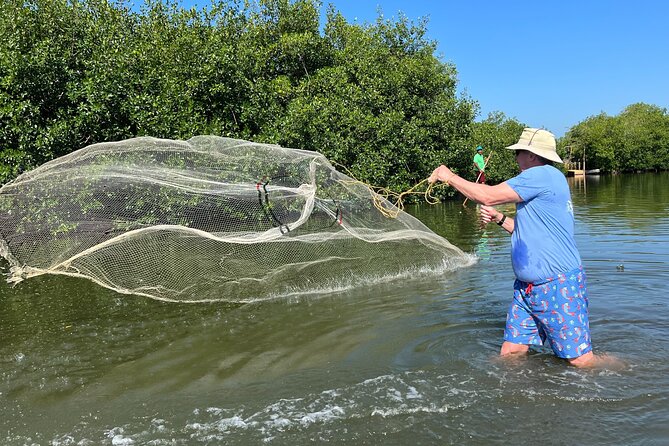
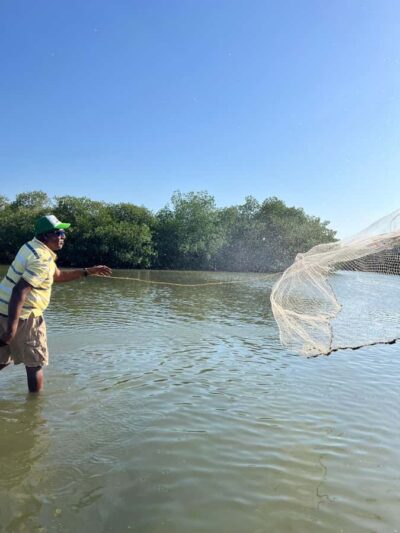
The net-fishing lesson is usually the most entertaining challenge. The guide demonstrates how to cast a large, round, weighted net, then gives you a chance to try. It looks easy when a local fisherman does it. For most first-timers, getting the net to spread correctly takes practice.
This is a hands-on skill, not a quick photo stop. You may get several attempts, and a private tour gives you more room to keep trying. The net is often used for the fun of learning the technique, and your catch may be small or nonexistent. That is not a flaw, as long as you understand that the activity is about the method and the setting.
You might also stop in shallow water to look for edible snails. One account describes walking in knee-high water over a sandy bottom. Other outings may involve staying in the canoe, so expect the exact water activity to depend on the conditions and the guide’s plan.
Wear footwear that can get wet. Water shoes were useful for some people, while another outing found the sandy bottom comfortable without them. The safer choice is footwear with a secure fit, especially if you plan to step into the lagoon.
More fishing trips around the world:
- Tromsø: Arctic Fjord Cruise & Fishing Experience
★ 4.7 · 4,588 reviews - Cooking Class Hoi An:Local Market, Basket Boat, Fishing & Cooking
★ 5.0 · 3,660 reviews - Hoi An Cooking Class(Market,BasketBoat Crabfishing&Cooking Class)
★ 5.0 · 3,386 reviews - Hoi An Cooking Class(Local market,Basket Boat,Fishing & Cooking)
★ 5.0 · 1,323 reviews
Birds, mangrove tunnels, and a quieter Cartagena
The natural setting is the reason to book this rather than a standard city tour. The mangrove tunnels provide shade, and the slow canoe ride gives you a real break from Cartagena’s traffic, heat, and busy streets. Bird sightings are common enough to be part of the appeal, though the tour does not promise a formal bird-watching list.
This is also a good activity for anyone curious about how coastal communities use and care for their waters. The local fishermen do more than operate the boat. They teach the traps, the net, and the daily rhythm of the lagoon. That local contact is the strongest part of the experience.
The change in scenery comes with a practical tradeoff. You are still in hot, humid Cartagena, even under the mangroves. Apply more sunscreen than you think you need, bring water, and wear a hat or long-sleeved swim shirt. Bottled water is provided during the canoe portion, but you should still arrive ready for heat.
The optional island, fish farm, and raccoon
The small island stop costs 12,000 Colombian pesos per person. It is not included in the base price, so decide before you go if the added stop interests you.
The island can include a look at a small fish farm, local trades, drum playing, and the role of mangroves. You may also meet the resident raccoon. It is a memorable wildlife encounter, though it is wise to treat the animal as a wild creature rather than a pet. One account jokingly described it as an ankle biter, which is a useful reminder not to get careless.
Some people find the island a fun extension, especially if they enjoy music, local demonstrations, and a social stop. Others prefer the lagoon itself and feel the island is more arranged for visitors than the fishing portion. If your priority is quiet nature and the most ordinary local activity, you can skip it. If you want more variety, the modest extra fee may be worthwhile.
A beach lunch with fish, rice, and plantains
After the canoe portion, you eat at a beachfront restaurant, usually in a large open-sided palapa-style setting. This is not a quick sandwich stop. The meal includes soup, salad, fried plantains, coconut rice, and a beverage, with a choice of whole fried fish, grilled chicken breast, or a vegetarian plate.
The food is an important part of the value. Cartagena has no shortage of restaurants, but eating after handling traps and learning local fishing gives the meal a clear connection to the morning. The fish and crab combination is particularly appealing if you choose to add the crab-cooking service.
The vegetarian choice means non-seafood eaters can still take part, while the chicken option works for people who want a familiar meal. The included lunch also helps justify the price, especially for a private four-hour outing with transportation and equipment.
What the $89 price really buys
At $89 per person, this is not the cheapest way to spend a half day in Cartagena. You are paying for private transportation, a private guide, canoe use, crab cages, bait, a fishing net, bottled water during the canoe trip, and a full lunch.
The value depends on what you want from a tour. If you only want to sit on a boat or see mangroves from a distance, the cost may feel high. If you want a private guide, local instruction, hotel pickup, and a meal tied to the activity, the price is easier to defend.
The biggest value is the access to ordinary coastal life. You get to handle the gear, ask questions, try the net, and spend time with local fishers. That is more personal than a sightseeing cruise, though less predictable than an attraction with a fixed program.
The activity is commonly booked about 39 days ahead, so reserving early is sensible if your dates are fixed. Free cancellation is available up to 24 hours before the start time. Poor weather or failure to reach the minimum group size can lead to a rescheduled date, another experience, or a full refund.
Who will enjoy this most
I would choose this for families with children aged four and older, couples wanting a quiet change from the city, and friends who enjoy practical activities. Kids can help check traps, try the net, and watch the catch become part of lunch. Adults should be ready for heat, water, simple facilities, and the chance of a small catch.
It also suits people who care about community-based tourism. The outing works with local fishermen, guides, translators, and drivers rather than keeping you inside a large commercial operation. Guides including Andrés have helped explain local customs, fishing methods, and appropriate ways to support the people involved.
You may want to skip it if you need air-conditioning, a guaranteed seafood catch, or a highly polished attraction. The road can be rough, the lagoon is hot, and nature does not follow a schedule. The setting is peaceful, but the day is still physical enough to require sunscreen and clothes that can get dirty.
Practical packing advice for four hours
Bring sunscreen and reapply it often. The water reflects the sun, and several hours outdoors can catch you off guard even when the canoe passes through shaded mangroves.
Pack a hat, a long-sleeved swim shirt, and secure footwear that can get wet. Clothes should be comfortable and washable. A change of clothes is sensible if you plan to walk in the water or help with the canoe.
Keep your expectations flexible. You might catch several crabs, snails, or small fish, but you might also have a slow day. The good part is learning how the traps and nets work, seeing the mangroves, and sharing time with local fishers.
Should you book the Cartagena crabbing tour?
Book it if you want a genuine break from Cartagena’s main tourist streets and prefer doing something with your hands. The private format, hotel pickup, local fishing instruction, peaceful canoe ride, and substantial beach lunch make this a strong half-day choice for families and small groups.
I would add the island only if you want music, a fish-farm stop, and the raccoon encounter. I would add crab cooking if tasting your own catch matters to you. Skip both extras if your main goal is the lagoon and the most natural-feeling part of the outing.
The $89 price is fair for the transport, equipment, private attention, and lunch, but it will not suit every budget. Go prepared for heat and an uncertain catch, and you’ll have a much better time.
FAQ
How long does the Cartagena fishing and crabbing experience last?
The activity lasts approximately four hours.
Is transportation included?
Yes. Private round-trip transportation from the tourist zone and hotel pickup in Cartagena are included.
What activities take place on the lagoon?
You ride a canoe through mangrove channels, set crab traps, use bait, try weighted net fishing, look for edible snails, and watch for birds.
What lunch choices are available?
You can choose whole fried fish, grilled chicken breast, or a vegetarian plate. Lunch also includes soup, salad, fried plantains, coconut rice, and a beverage.
Is the island stop included?
No. The optional island stop costs 12,000 Colombian pesos per person.
Can the crabs be cooked?
Yes. An optional crab-cooking service costs $14 USD per group.
What is the minimum age?
Children must be at least four years old to participate.
Just landed around the world
- ZANZIBAR FISHING EXPRIENCE★ 3.3 · 6 reviews
- Zanzibar Sea Fishing Boat Tour experience with Transfer★ 3.8 · 16 reviews
- Zante Fishing Tours★ 5.0 · 7 reviews
- Wonga Beach: Hook-A-Barra Fishing Experience★ 4.7 · 16 reviews
- Wonga: Guided Fishing, Farming and Tasting Tour★ 5.0 · 2 reviews
- Ylläs: Snowmobile Adventure with Ice Fishing★ 4.7 · 18 reviews
- From Seoul: Hwacheon Ice Fishing and Lighting Festival Tour★ 4.5 · 4 reviews
- Wismar: Harbor Cruise with Sea Animal Fishing and Guide★ 4.6 · 22 reviews
Colombia Fishing Trips, compared.
Cartagena: Mangrove Eco Tour & Fishing with Transportation
Read our review →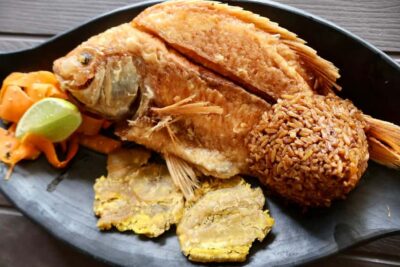
Typical lunch on beach, mangrove tour & fishing with natives
Read our review →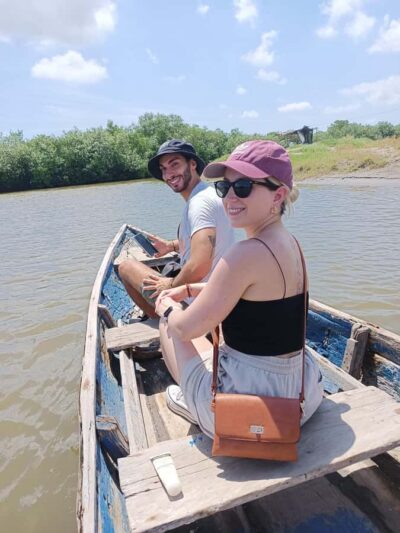
Mangroves, cultural fishing, black heritage town and lunch
Read our review →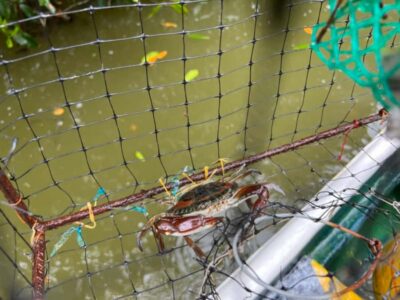
Cartagena Fishing, Crabbing, Birdwatching Experience + Lunch
Read our review →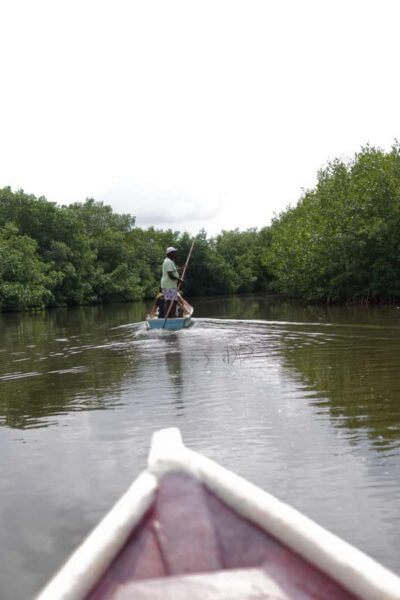
Cartagena: Artisanal fishing through the mangroves
Read our review →Other lists this trip sits in