
Review · SRI LANKA
Stilt-Fishing Experience in Ahangama
At Ahangama Beach, fishermen sit on narrow wooden stilts above the water, balancing with the calm precision of people who have practiced for years. You can watch four local fishermen at work, then learn the method and try stilt fishing yourself. I like the hands-on fishing lesson and the chance to eat the catch prepared the same day. I also like that the experience reaches beyond the beach, bringing you into a village with about 10 local residents who demonstrate weaving and household crafts.
The main consideration is price. At $140 per person, this is not a quick photo stop or a simple beach activity. You are paying for a private, English-guided three-hour program with cooking, food, fishing, and a village visit, so it makes the most sense if you want a full cultural outing rather than only a look at the stilts.
Key points at a glance
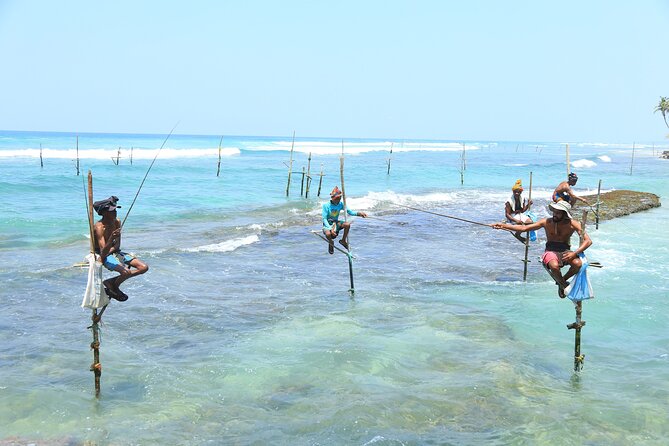
- Four fishermen on Ahangama Beach: Watch an old coastal fishing method at close range, with the option to try it yourself.
- A private three-hour program: Only your group participates, which can make the fishing lesson and cooking session more personal.
- A village visit with about 10 residents: See finger weaving and the making of rugs, table mats, chairs, and other household items.
- Lunch built around the catch: Fresh fish from the activity is prepared with traditional Sri Lankan recipes and heirloom ingredients.
- Live cooking, tea, and snacks: The meal is part of the experience, not simply food handed to you at the end.
- Simple meeting point: Begin at Hopper street food in Ahangama at 10:30 am and return there when the activity ends.
Why stilt fishing is the main event
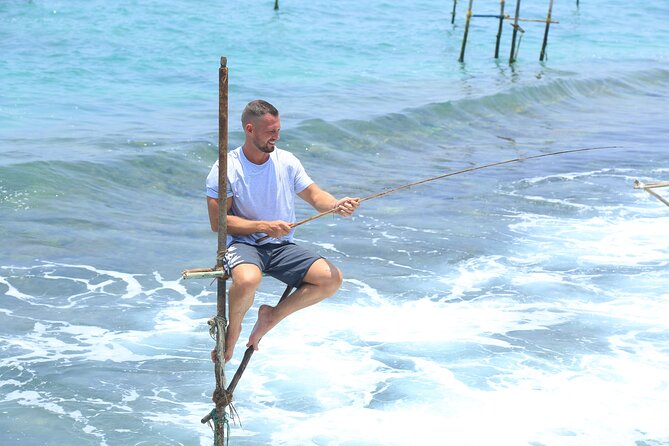
The fishing stilts are the visual hook, but the real value comes from seeing how much balance and patience the method requires. A fisherman sits or perches on a crossbar fixed to a tall wooden pole, positioned in shallow coastal water. From shore, the setup can look almost impossible. Up close, you begin to see the careful routine behind it.
This is an old practice associated especially with the Ahangama and Kathaluwa area. The local tradition has been described as involving about 500 families around Galle, though this experience focuses on four fishermen. That detail matters because stilt fishing is not just a staged beach image. It is a working tradition tied to the coast and to the daily life of fishing communities.
Your English guide leads the session and explains how the fishermen work. The exact teaching sequence is not specified, so you should expect a practical introduction rather than a formal classroom lesson. After watching, you have the option to try the technique yourself. That makes this more engaging than a standard sightseeing stop, but it also means you should be ready for a physical activity that depends on balance and comfort around the water.
The catch may include several types of fish found in the area. Any fish caught during the activity is intended for the same day’s meal, described as lunch or dinner. The amount of fish is naturally not guaranteed. Fishing is fishing, and the experience should be judged by the chance to learn the method, not by how much ends up on your plate.
More fishing trips around the world:
- Tromsø: Arctic Fjord Cruise & Fishing Experience
★ 4.7 · 4,588 reviews - Cooking Class Hoi An:Local Market, Basket Boat, Fishing & Cooking
★ 5.0 · 3,660 reviews - Hoi An Cooking Class(Market,BasketBoat Crabfishing&Cooking Class)
★ 5.0 · 3,386 reviews
A beach visit with something to do
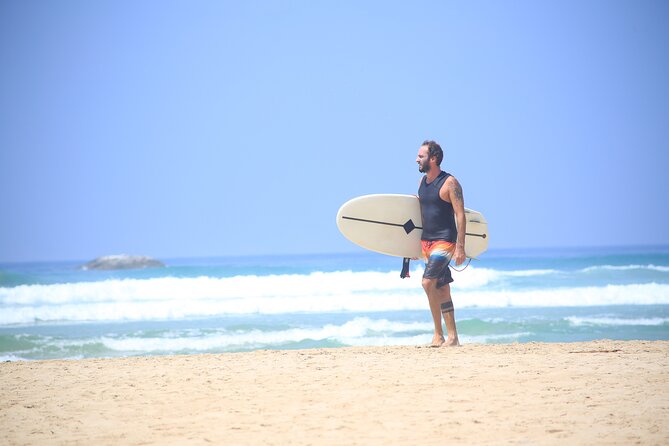
Ahangama Beach supplies the setting: open coastal views, clear water, and the unusual sight of fishermen raised above the sea. The beach portion is not presented as a long free period for swimming or sunbathing. It is focused on watching the fishermen, learning the method, and deciding if you want to take your own turn.
I like this format because the beach has a clear purpose. You are not simply being driven to a viewpoint, taking a picture, and leaving. The fishermen give you a reason to look closely. You notice the poles, the seated position, the fishing line, and the quiet movements that keep the system stable.
Still, keep your expectations realistic. The experience lasts about three hours in total, and the fishing segment is only one part of the program. If your main goal is a long beach outing, this may feel brief. If you want to understand a distinctive local practice and take part in it, the shorter format works well.
The private setup is useful here. Since only your group participates, you can ask the guide to explain the equipment, the fishing method, and the local context at a pace that suits you. Group discounts are available, which may improve the value if you are traveling with family or friends.
From the shore to an Ahangama village
After the beach activity, the experience continues in a nearby village. This change of setting is important. Stilt fishing gives you a glimpse of coastal work, while the village visit shows other skills that support community life.
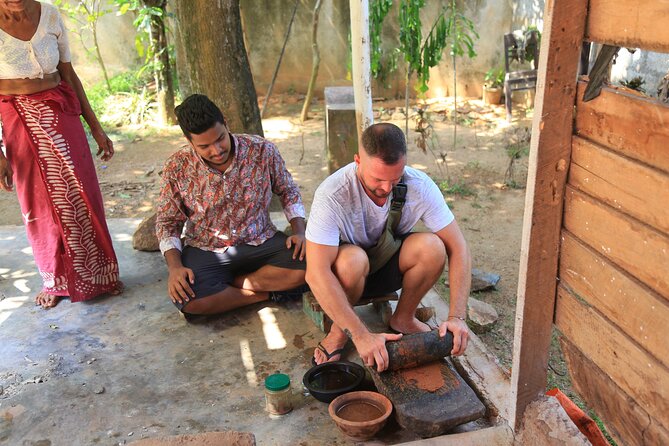
About 10 villagers take part in the cultural program. They demonstrate finger weaving and the creation of artisan household items, including rugs, table mats, and chairs. These demonstrations help connect the finished object with the time and handwork needed to make it.
Finger weaving is especially suited to a small-group visit because you can watch the movement closely. The description does not promise that every participant will make a complete item, so think of this as a demonstration and cultural exchange rather than a guaranteed craft workshop. You might be able to ask questions or observe the process at close range, with your guide helping in English.
I appreciate that the village stop includes ordinary household goods. Rugs, mats, and chairs are not simply decorative souvenirs. They show how local skills can be part of daily life. The visit also spreads the experience beyond the beach, giving you a fuller picture of village work in the Ahangama area.
The village portion may be the quieter part of the day. You are not moving from one major attraction to another. Instead, you are spending time with local hosts and watching repeated hand movements. That suits you if you prefer direct contact with local life. It may feel less exciting if you want constant action.
Cooking the catch with Sri Lankan recipes
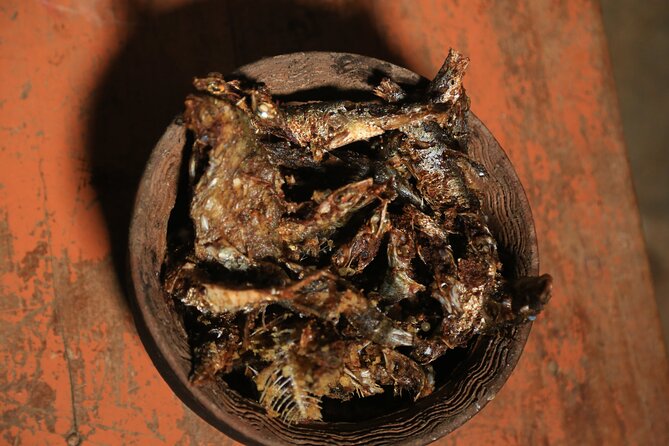
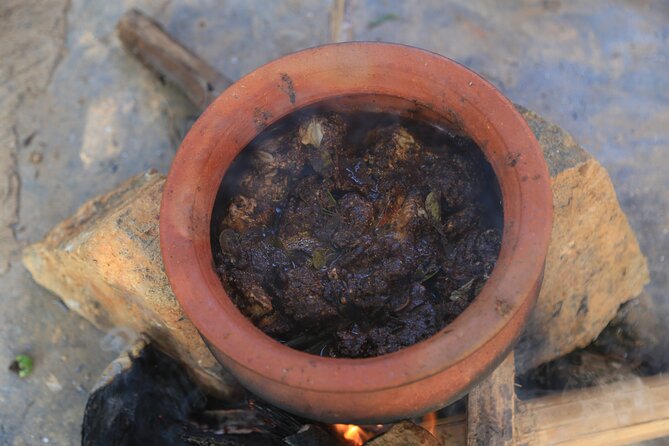
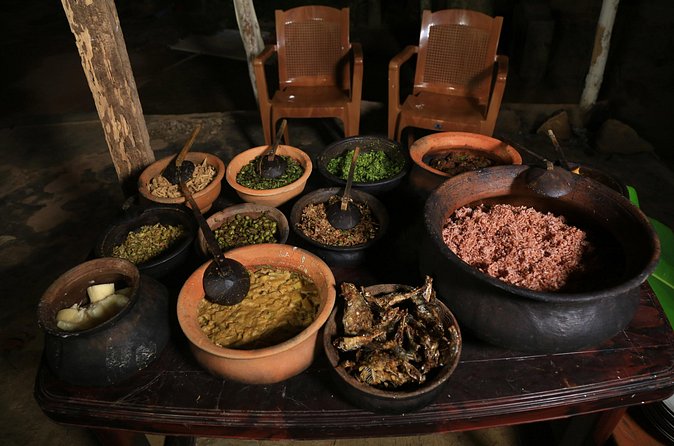
The food is another central part of the program. Local hosts prepare a Sri Lankan meal in front of you, using fresh ingredients described as organic and heirloom. The stilt fishing catch is included when available, so the meal links the morning’s activity with what you eat later.
The live cooking format gives the meal more meaning. You see traditional methods rather than only receiving a finished plate. The available information does not list every dish, spice, or cooking tool, so you should not book this expecting a fixed tasting menu. Instead, expect a selection of Lankan recipes prepared with the ingredients available for the session.
Tea and snacks are included. These smaller servings matter because the program begins at 10:30 am and runs for about three hours. The meal may be arranged as lunch or dinner according to the experience plan, so confirm the exact meal timing when you book if you need to coordinate it with the rest of your day.
I like the connection between fishing and cooking. You are not watching a tradition in isolation. You see food gathered, prepared, and served within the same local experience. That gives the activity a practical thread from the beach to the table.
There is also a useful limit to keep in mind: the catch is not a guaranteed menu item in a specific quantity. Weather, water conditions, and the success of the fishing attempt can affect what is available. The meal still includes other fresh ingredients and Sri Lankan recipes, but you should treat the fish as part of the day’s story rather than a promised portion of a particular species.
Same water, another way to fish it:
- Hoi An Cooking Class(Local market,Basket Boat,Fishing & Cooking)
★ 5.0 · 1,323 reviews - Hoi An: Market Experience with Optional Fishing and Cooking
★ 4.7 · 928 reviews - Rovaniemi: Snowmobile and Ice Fishing Adventure with Lunch
★ 4.8 · 879 reviews - Makarounas Fishing Boat Trip with swimming stop and BBQ on board
★ 5.0 · 831 reviews
What the three-hour schedule means
The stated duration is approximately three hours. The start time is 10:30 am, and the activity ends back at the meeting point at Hopper street food, identified by the location code X9C8+G74 in Ahangama.
The program has several moving parts:
- Meet the English guide and begin at the Ahangama food spot.
- Visit the beach and watch four experienced stilt fishermen.
- Learn the basic method and choose whether to try stilt fishing.
- Visit the nearby village and meet about 10 local residents.
- Watch weaving and artisan household-item demonstrations.
- Take part in the live preparation of a Sri Lankan meal, with tea and snacks.
The exact time spent at each stop is not given. That is worth noting if you are planning transport afterward. The activity is compact, but cooking and a village visit can take longer or shorter depending on the group and the demonstrations.
Because it is a private activity, you have more control than you would on a large group outing. You can ask questions and spend more time on the part that interests you most. The tradeoff is that the $140 price is per person, so the value depends heavily on group size and how much you want the personal format.
Is $140 per person a fair price?
At $140 per person, the experience sits well above the cost of a basic beach visit or a simple meal. The price covers a private activity, an English guide, stilt fishing instruction, access to four fishermen, a village visit, local demonstrations, live cooking, tea, snacks, and a meal connected to the day’s catch.
That is a substantial package for three hours. I would see the price as reasonable for someone who values personal guiding and cultural contact, especially when shared with a group that qualifies for a discount. It is harder to justify if you mainly want a photograph of fishermen on stilts.
The private format is the biggest value factor. You are not joining a large crowd, and only your own group participates. Families, couples, and small groups who want to ask questions may get more from this arrangement than solo visitors focused on keeping costs low.
You should also consider what is included in the price and what is not stated. The meeting point is given, but transportation to Ahangama is not listed as included. Plan to reach Hopper street food independently unless the provider confirms another arrangement. Since the activity returns to the same point, you have a clear end location for onward plans.
Who will enjoy this most?
I would recommend this experience to you if you want three things in one outing: a distinctive coastal tradition, a local village encounter, and a meal prepared in front of you. It suits curious eaters, photographers, families with older children, and anyone who prefers a small private program to a large sightseeing group.
It is also a good match if you like trying an activity rather than only observing it. The chance to sit on a fishing stilt and attempt the method yourself is optional, so you can watch if you are not comfortable. The experience still has value without taking your turn.
You may want to choose something else if you need a highly structured timetable, a guaranteed catch, or a long day at the beach. The itinerary brings together several activities, and the exact balance between fishing, village demonstrations, and cooking is not provided.
Accessibility details are limited. Service animals are allowed, and the meeting point is near public transportation. Since the activity includes beach fishing, stilts, and a village visit, ask the provider about the physical requirements before booking if balance, uneven surfaces, or water access could be a concern.
Booking and cancellation details to keep in mind
Confirmation is sent within 48 hours of booking, subject to availability. It is wise to avoid scheduling a tight connection immediately afterward until your place is confirmed.
You can cancel for a full refund up to 24 hours before the local start time. Cancellations or changes made less than 24 hours before the start are not accepted for a refund. Group discounts are available, and the mobile ticket makes it easy to keep the booking details with you.
The experience is listed as private, so only your group takes part. That is particularly useful for the fishing lesson and cooking session, where extra time for questions can make a real difference.
Should you book the Ahangama stilt-fishing experience?
Book it if you want more than a beach photograph. The strongest reason to go is the combination of watching four stilt fishermen, trying the old method yourself, meeting village artisans, and eating a meal prepared with local ingredients and possibly your catch.
At $140 per person, this is a considered purchase. I would choose it for a special half-day outing, a small group, or a first visit to the Ahangama area when you want local context along with scenery. I would skip it if your only goal is to see the stilts from shore or if you need a low-cost activity.
The best approach is to arrive ready for a flexible cultural experience. The fishing may produce several types of fish, but no catch can be guaranteed. The real reward is seeing how a coastal tradition, village craft, and Sri Lankan cooking fit together in one short visit.
FAQ
Where does the stilt-fishing experience start?
It starts at Hopper street food in Ahangama, Sri Lanka. The location is also identified by the code X9C8+G74.
What time does the activity begin?
The start time is 10:30 am.
How long does the experience last?
The activity lasts approximately three hours.
Where does the experience end?
It ends back at the meeting point at Hopper street food in Ahangama.
Can I try stilt fishing myself?
Yes. You can learn the basic method from the experienced fishermen and choose whether to try stilt fishing yourself.
How many fishermen take part?
The experience includes four stilt fishermen.
What happens during the village visit?
You meet about 10 villagers who demonstrate traditional activities such as finger weaving and making rugs, table mats, chairs, and other artisan household items.
Is food included?
Yes. The experience includes an authentic Sri Lankan meal, live cooking, tea, and snacks. The fish caught during the activity may be prepared for the same day’s lunch or dinner.
Can I cancel for a full refund?
Yes, if you cancel at least 24 hours before the experience’s local start time. Cancellations or changes made less than 24 hours before the start are not accepted for a refund.
Just landed around the world
- ZANZIBAR FISHING EXPRIENCE★ 3.3 · 6 reviews
- Zanzibar Sea Fishing Boat Tour experience with Transfer★ 3.8 · 16 reviews
- Zante Fishing Tours★ 5.0 · 7 reviews
- Wonga Beach: Hook-A-Barra Fishing Experience★ 4.7 · 16 reviews
- Wonga: Guided Fishing, Farming and Tasting Tour★ 5.0 · 2 reviews
- Ylläs: Snowmobile Adventure with Ice Fishing★ 4.7 · 18 reviews
- From Seoul: Hwacheon Ice Fishing and Lighting Festival Tour★ 4.5 · 4 reviews
- Wismar: Harbor Cruise with Sea Animal Fishing and Guide★ 4.6 · 22 reviews